
The Fast Teaming Guide: Virtual Working
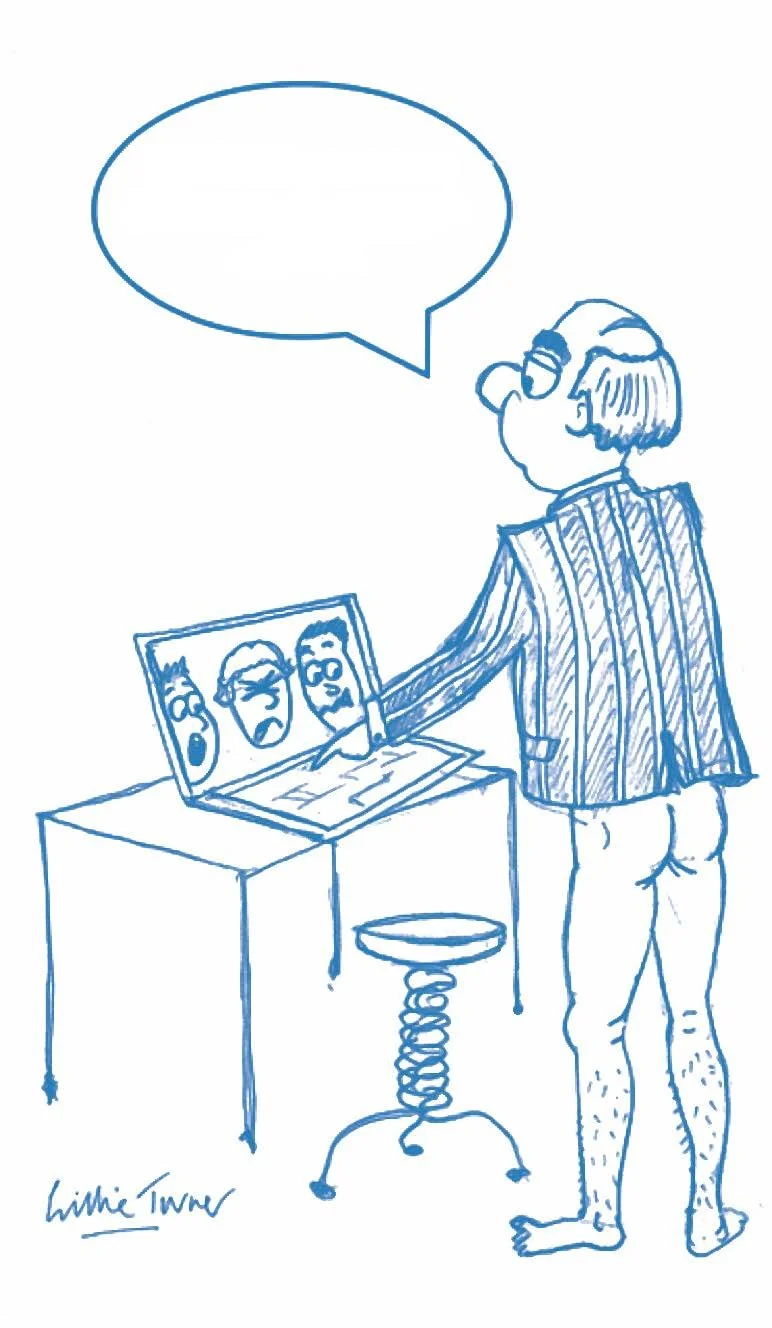
COVID-19 made virtual working an unavoidable reality. Many of us could relate to the mixed bag of positives and negatives it brought. Positives included no commuting, freedom from early alarms, avoidance of cramped public transport or stressful traffic, and more time with loved ones instead of exhausted grunts after long days. It’s no surprise that 73% of us felt the positives outweighed the negatives.
Leading a virtual team is known to be a tough ask. The Fast Teaming Formula™ has been designed to help virtual team leaders, as virtual teams might be considered a more ‘extreme’ leadership task, and the more extreme the teaming conditions, research shows, the better the formula works. The trend for virtual working shows no signs of abating. So, in wanting to help more virtual team leaders succeed, we will share with you how to deploy it, so you can address the right things in the right order. First though, lets recognise the challenges presented by the virtual working terrain, so we can appreciate what we’re all dealing with.
Isolation: Without social connection, loneliness grows, reducing our ability to innovate and contribute effectively. Isolation has been linked to worsening mental health in the UK with an 8.1% average increase in mental health issues from 2020, especially among young adults and women.
Conflict: Virtual teams create more misunderstandings and with these, more rework, in turn reducing our productivity and increasing tensions across the team.
Stress: Working virtually risks both overwork and underwork – both of which cause stress in the team. Without boundaries awarded by commuting, work easily bleeds into personal time, reducing our ability to cope. We can struggle without office routines, distracted by home life yet feeling guilty for a believing we are underperforming. Relentless video calls drain energy and even the most energetic of us can feel utterly shattered after a day of back to back on-line meetings.
Conflict and Trust
Trust is vital for team success, and especially so in virtual teams with their less frequent face-to-face interactions. We know that the less a team meets in person, the less trust it builds.
When we relate virtually, we tend to be more stubborn, less likely to compromise on our views and more reluctant to openly disagree with others and reveal our hands. We see more unresolved conflict and a decline in some people’s helpfulness. We then start thinking bad things about them, decreasing our confidence in their competence. Lower emotional and cognitive based trusts then reduce overall interpersonal trust.
If you think leading a virtual team is tough, those leading a global virtual teams (GVTs) have it even harder. Time zones and cultural differences only exacerbate the same issues. GVTs suffer less participation, slower decision-making, less clear roles, and poorer follow-through.
Your Virtual Leadership Playbook
The advice you’re about to receive is all evidence based, documented in journals and field tested by Team Up. Our Fast Teaming Formula™ will guide you, advise what to do and in what order and safeguard you from wasting precious time.
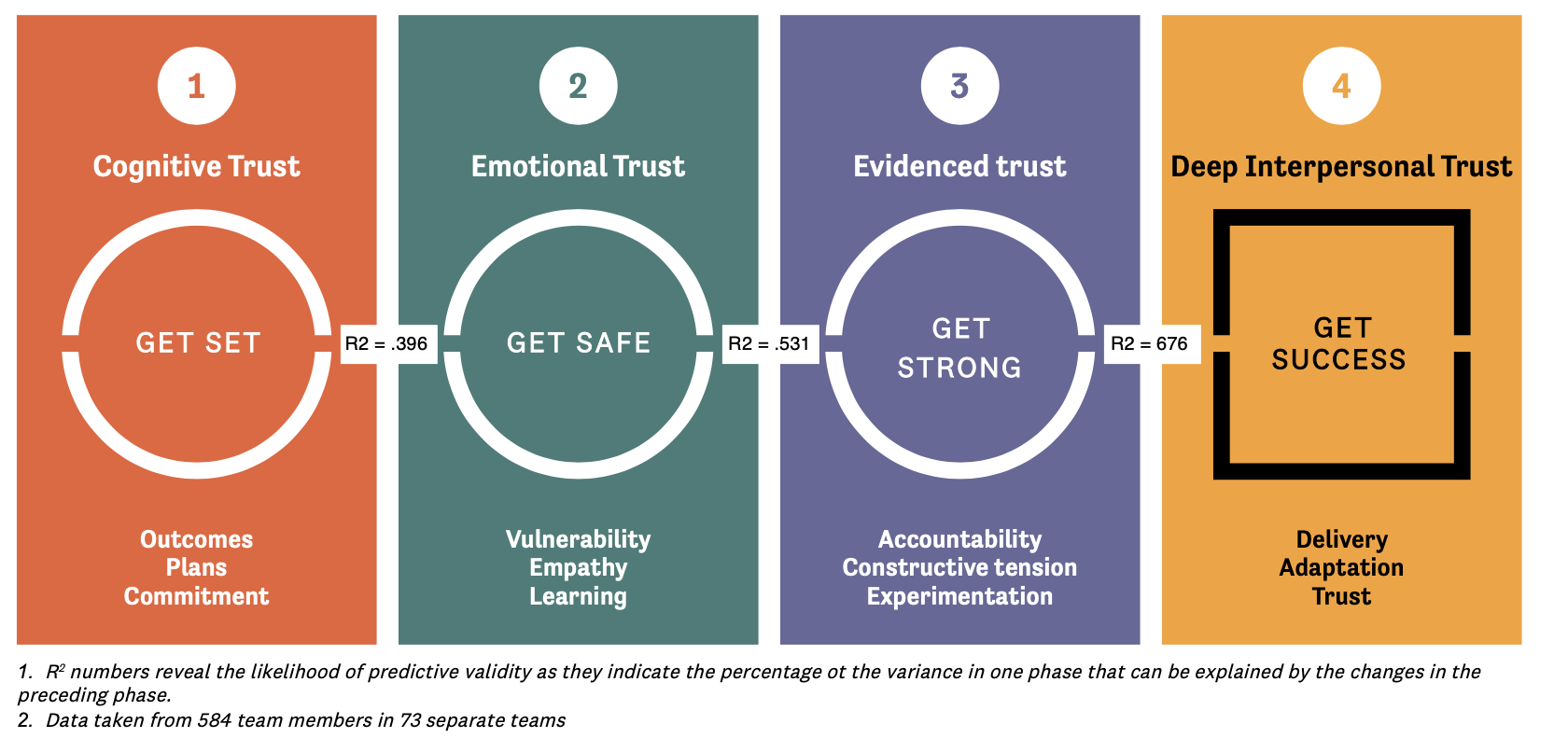
Get Set to ➡ Get Safe to ➡ Get Strong to ➡ Get Success
The Fast Teaming Formula™ – The Science behind Fast Teaming
Select task and action orientated people who are naturally more trusting.
The formula first advises you to build clarity and alignment in the Get Set Phase, to quickly establish swift trust. It lists the 9 most important ‘agreements’ that are to be made, understood and honoured. Before you do this, remember, the most important factor affecting any team is selection. You want the right people in role. For the virtual team, as it is a more ‘extreme’ team, the importance of team members building swift trust becomes pronounced. So, you want to be recruiting task-oriented, high-trust individuals: virtual teams thrive with practical, action-focused people who quickly form trust.
Get Everyone on the Same Page by explicitly agreeing mission, goals, roles, decision-making responsibilities, and ways of working. Gain clarity in this order, but pay particular attention to the following:
Define roles clearly but allow overlap: Clear accountability combined with some role flexibility builds resilience.
Agree on team norms: Setting clear expectations upfront builds conditional cognitive based trust, which then is quicker actualised when team members display them.
Make an empowerment deal: Distribute leadership and decision-making authority clearly and intentionally to boost autonomy and learning, even in traditionally autocratic cultures.
‘Getting Set’ as we call it, is all about alignment, clarity and being on the same page. Each builds cognitive based trust, which is faster to accrue than emotional based trust. Staying on the same page then becomes your primary challenge. Resetting is only possible when the team achieves a reasonable level of psychological safety and then balances this with the right amount of constructive tension in how it challenges each other.
Build Psychological Safety & Empathy
Consolidate this clarity with empathy and support: role model and encourage the team to show vulnerability by admitting what they don’t know or understand, by apologising for mistakes made, by sharing emotions, and bringing high energy, optimism and positivity. These all enhance psychological safety.
Operationalise feedback and learning with meetings that enable team reflexivity – the reflecting on how the team is working together. Reflexivity drives continuous improvement, reduces conflict, and fosters an often missing sense of connection. We teach teams to use MAP (Mirror - Adjust - Progress) techniques which gives them a structure that builds the skill-set to be able to have these more open conversations. Simply diarising a regular ‘how are we feeling and doing’ call could be transformational. Make sure feedback is descriptive though, to avoid blaming language.
Insist and Enforce Accountability and Reliability.
In virtual teams, reliability is especially important - doing what we say we’ll do and communicating progress. This means engaging in excellent meeting discipline via clear agendas, updates on progress made and summaries of actions, deadlines and owners. Double down on clarity and over communicate if necessary.
Handle feedback carefully: negative feedback is tricky to handle virtually; it requires high levels of psychological safety and excellent dialogue skills. Be wary of opening cans of worms that others can’t close. The Fast Teaming Formula™ guides us to only enter these conversations (Get Strong) when you’ve acquired the cognitive based trust from getting everyone on the same page (Get Set) together with the emotional based trust and the psychological safety gained from being vulnerable with each other, tuning into each other and time spent reflecting together (Get Safe).
Trust takes longer to build and is easier to lose virtually, so look out for warning signs and patterns and act quickly to resolve issues. Laissez-faire leadership and virtual team working don’t go well together.
Key Takeaways
It’s harder for virtual teams to team well, there is more chance of isolation, stress, conflict and loss of productivity.
Virtual teams are more ‘extreme’ so leaders can use our Fast Teaming Formula™ to help guide them in their leadership.
First establish swift, cognitive based trust through clarity and shared understandings of what you are doing, who’s doing it and how it will be done.
Along the way build psychological safety by fostering empathy and support.
Drive accountability to maintain reliability and performance.
Be wary of encouraging the team to engage in the tougher feedback conversations without having accrued higher levels of cognitive and emotional based trust.
➜ Read George Karseras’s Ground Breaking Book: Build Better Teams for a more detailed potted history of team development and useful tips and techniques to speed up building your team from applying the Fast Teaming Formula™, the new fast working team building code, endorsed by both Amy Edmondson and Edgar Schein.