
Case Study: Fast Conflict Resolution
How to use the Fast Teaming Formula to rescue and repair broken relationships
Jack and Jill are both very senior executives working in the same Transformation Team of alarge organisation. Jill is new in role, but there’s a personality clash and Jack doesn’t trusther. As a result, Jack doesn’t engage Jill in the same positive way he does with everyoneelse. At meetings he makes little eye contact, and outside of meetings he makes no effort toengage or even to reply to her emails, even though Jill has been reaching out.
Jill observes this and feels ostracised, rejected and worried, not least because she requiresJack’s collaboration on a piece of work that she is on the hook for, and as she’s new, shewants to quickly demonstrate her value. So, she makes a point of engaging with Jack atteam meetings and drawing him into conversations to try to build her relationship with him. She does this a bit more clumsily than normal as she’s now feeling vulnerable and low inconfidence. Jack doesn’t know Jill is having a crisis of confidence and because he isn’timpressed by her or her lack of eloquence and subtlety, he trusts her even less. But Jill haspersistence, so she tries even harder. However, Jack knows what good influence looks likeand continues to be unimpressed by Jill’s nervous clumsiness. So, his trust diminishesfurther, which is picked up by Jill making her feel even more anxious. This ensuing viciouscycle is now creating an increasingly dysfunctional relationship.
The Conflict-Avoidant Leader
Some of the team watched and naturally formed sides and although others could see both sides and tried to help, nothing seemed to be working. Barbara, the team leader, ‘conveniently’ consumed with other matters, also happened to have an aversion to dealing with conflict, especially if it risked long-standing relationships. Barbara had known Jill for years. Barbara called Team Up in to help.
They First Aligned
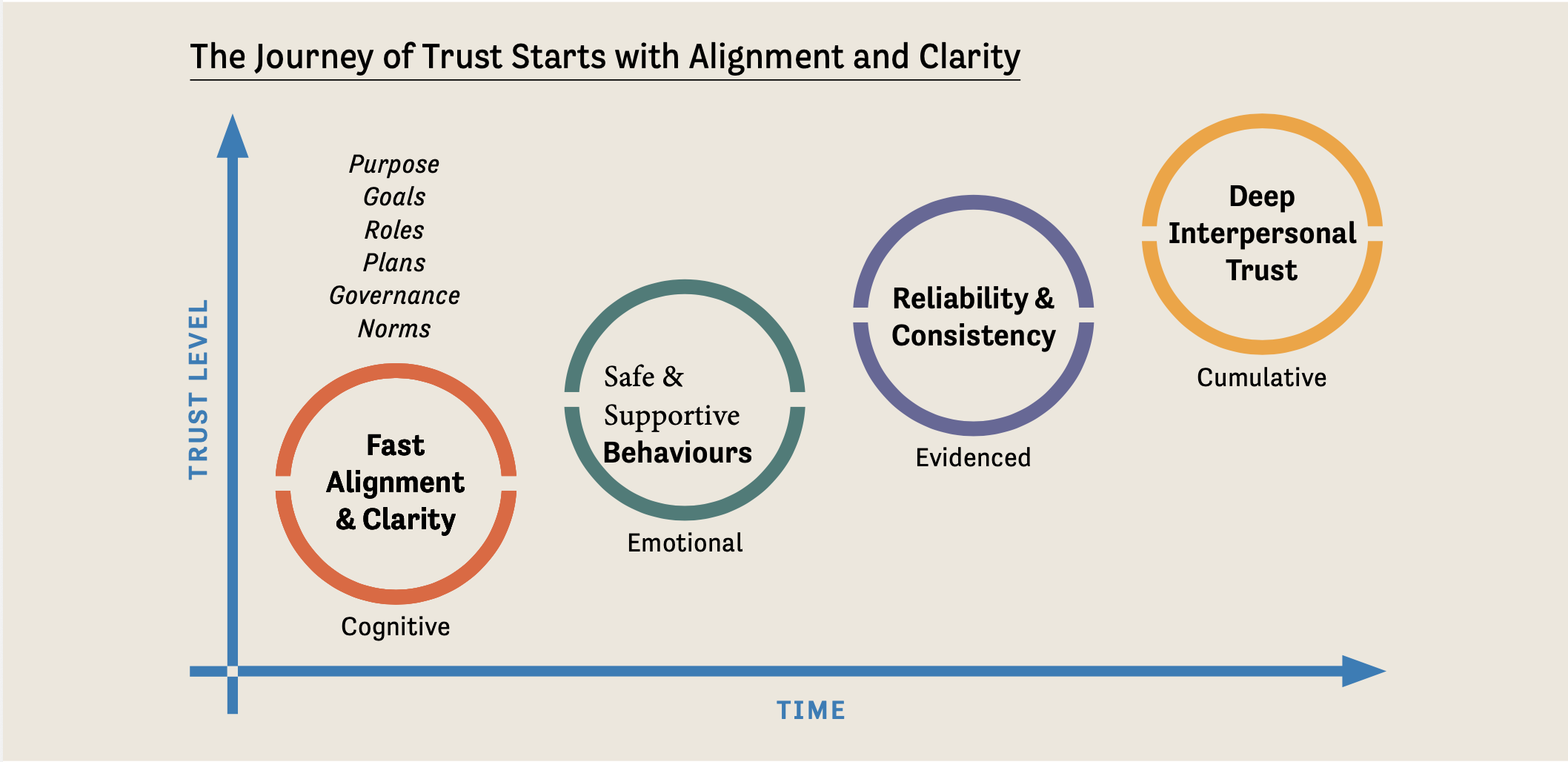
Jack and Jill found it very hard to build mutual trust and psychological safety. Jack’s disappointment and anger with Jill didn’t help. She didn’t realise it at the time, but much of her frustration was due to different expectations of goals and roles. These 'misalignments' eroded cognitive based trust. Jack and Jill failed to ‘Get Set’ which is the first phase of the Fast Teaming Formula™.
The team leader had inadvertently created two different understandings of Jill’s role and Jack’s responsibilities. While Jack felt Jill was overstepping her remit, Jill felt Jack was not collaborating on the goal they co-owned. As neither their goals nor their roles were agreed between them, the meetings that Jill sought were seen as annoyingly unnecessary by Jack – so he ignored them.
With a little help, they soon discovered their different expectations and started to align better. They reached out for clarity from Barbara, their boss, and when the three of them were finally aligned, and better ‘set’ they were ready to go to the next stage of their reconciliation.
Then They Built Psychological Safety
With shared understandings and alignment on roles and goals in place, we could more easily move onto building much needed psychological safety. They connected in more authentic way by revealing their back stories and vulnerabilities. Natural empathy then flowed and with it compassion and helpfulness. Jill showed her loving, caring and supportive side. A more trusting relationship began to take shape.
Then They Influenced Each Other
Jack and Jill had created, up until now, a relationship defined by passive aggression and hostility. However, by aligning mutual understandings of goals, roles and responsibilities, then increasing psychological safety, they began to interact more constructively. Jill was able to ask Jack to release more resource, to redirect and to re-prioritise his team’s work to support her and her team to deliver their workloads. Jack agreed to help Jill.
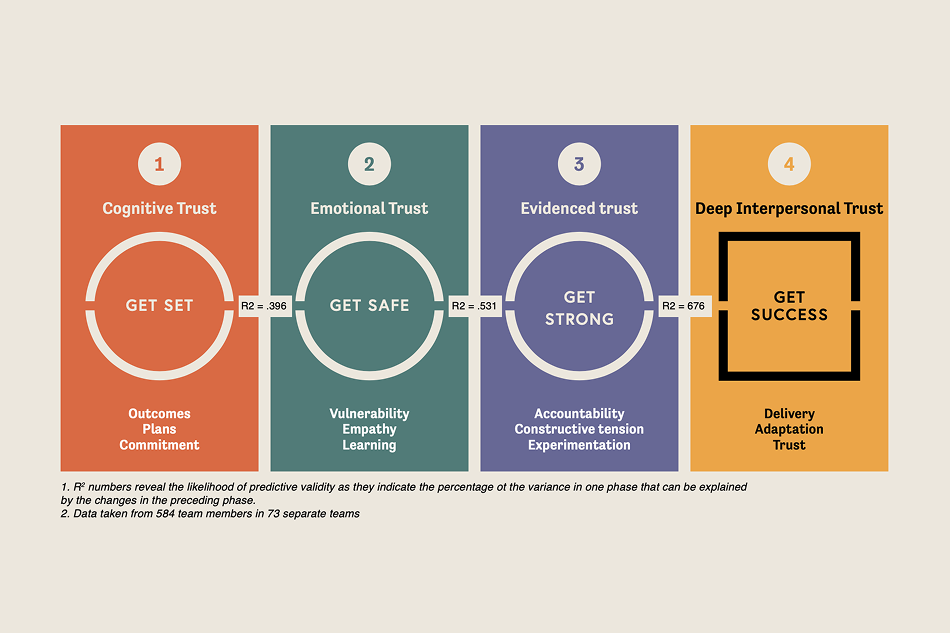
This mutual influencing and helpfulness took them into the ‘Get Strong’ phase of the Fast Teaming Formula™. It became obvious to them that their resulting collaboration was forged on the basis of the clarity and trust they gained in the previous Get Set and Get Safe phases.
Ultimately They Delivered Together (Get Success)
Despite an obvious personality clash, Jack and Jill were able to collaborate and in doing so they were able to experiment, adapt and ultimately deliver their shared goals, all three of which define the final Get Success phase of the Fast Teaming Formula™.
The Fast Teaming™ Formula
Applying the Fast Teaming Formula™ can help you navigate inter-personal conflict in your team by giving you and those in conflict, a simple sequence to work through. Look first at the Get Set phase. Often conflict is caused by different expectations of roles and responsibilities, which then sets in motion a series of further dysfunctions through the Get Safe and Get Strong phases, the latter being where the conflict will be most visible.
The Fast Teaming Formula™ is grounded in science, endorsed by experts and simple to understand.
‘Get Set’ → ‘Get Safe’ → ‘Get Strong’ → ‘Get Success’.
➜ Read George Karseras’s Ground Breaking Book: Build Better Teams for additional tips and techniques to speed up the process of building your team using the Fast Teaming Formula™, endorsed by Amy Edmondson and Edgar Schein.