
In Search of the Holy Grail: The Story Behind the Fast Teaming Formula™
Up until now, there has never been a simple, practical but science based team building model that team leaders can use with confidence.
Leaders Need More Help
Today’s leaders could do with more help to more quickly build high performing teams. Many have been relying on well-known models like Lencioni’s 5 Dysfunctions Model or Tuckman’s Forming, Norming, Storming, Performing approach, now approaching 25 and 60 years old respectively. Although useful frameworks to help guide conversations to improve team working, both models were devised for more linear, stable and long-lasting teams compared to today’s more agile, cross-functional, quick-forming, virtual environments.
Tuckman’s approach (by his own admission) is more a description of potential phases than a self-help guide to team building, and in the case of the 5 Dysfunctions Model, researchers have identified flaws in what it claims (1) and contradictions in the all-important order it advises teams to work through (2).
We felt it was high time to help leaders separate truth from fiction, prevent them from being led down the garden path, and give them more certainty in what to do — and in what order — to quickly build their teams. So, five of us started a five-year deep dive into academic studies to identify the most efficient way of building teams. Whilst every team and context is different, and no model is guaranteed to work, could we create a new, ground-breaking, robust formula that would stand up to scientific scrutiny?
Improving Team Effectiveness Has Always Been a Challenge
Leaders have a distinctly poor track record developing teams, with 79% of top teams found to be mediocre at best (3) and 60% of all teams failing to achieve their goals (4). Even leaders themselves admit that only 10% of teams are high performing (5). Other studies have shown that only 1 in 5 teams are considered high performing.
This poor track record also extends to how teams fail to collaborate with other teams. Most employees don’t cooperate or share knowledge with other departments (6). So not only do teams not work that well, they don’t appear to be connecting with other teams either.
Team Effectiveness Is Now Even More Challenging
Decades after these older models were conceived, a range of factors now make team working even more difficult: the speed and impact of digitalisation, growing individualism, worsening mental health, increasing diversity, more regulatory pressures and the rise of virtual working. When we began our research, we didn’t have “Woke-ness” nor COVID-19. Today we are even more convinced that leaders need a simple, relevant, trustworthy model to help them build effective teams more quickly.
In Search of a Practical New Formula
We were scrupulous. We weren’t interested in pop psychology, lazy journalism or self-serving “research” by consultancies. We only sought respected peer-reviewed studies in academic journals. We invested in psychology research engines and partnered with an organisational psychology research company. We extracted data from literally hundreds of thousands of academic studies published during the last 30–40 years.
We found several team behaviours that predicted other behaviours, which in turn predicted positive performance outcomes. We created the makings of a formula and refined it further. Our formula had to satisfy three conditions:
Simple and easy to use — team leaders don’t need complicated algorithms.
Measurable — able to be turned into diagnostic questions.
Actionable — allowing leaders to take clear steps to improve team working.
Publication
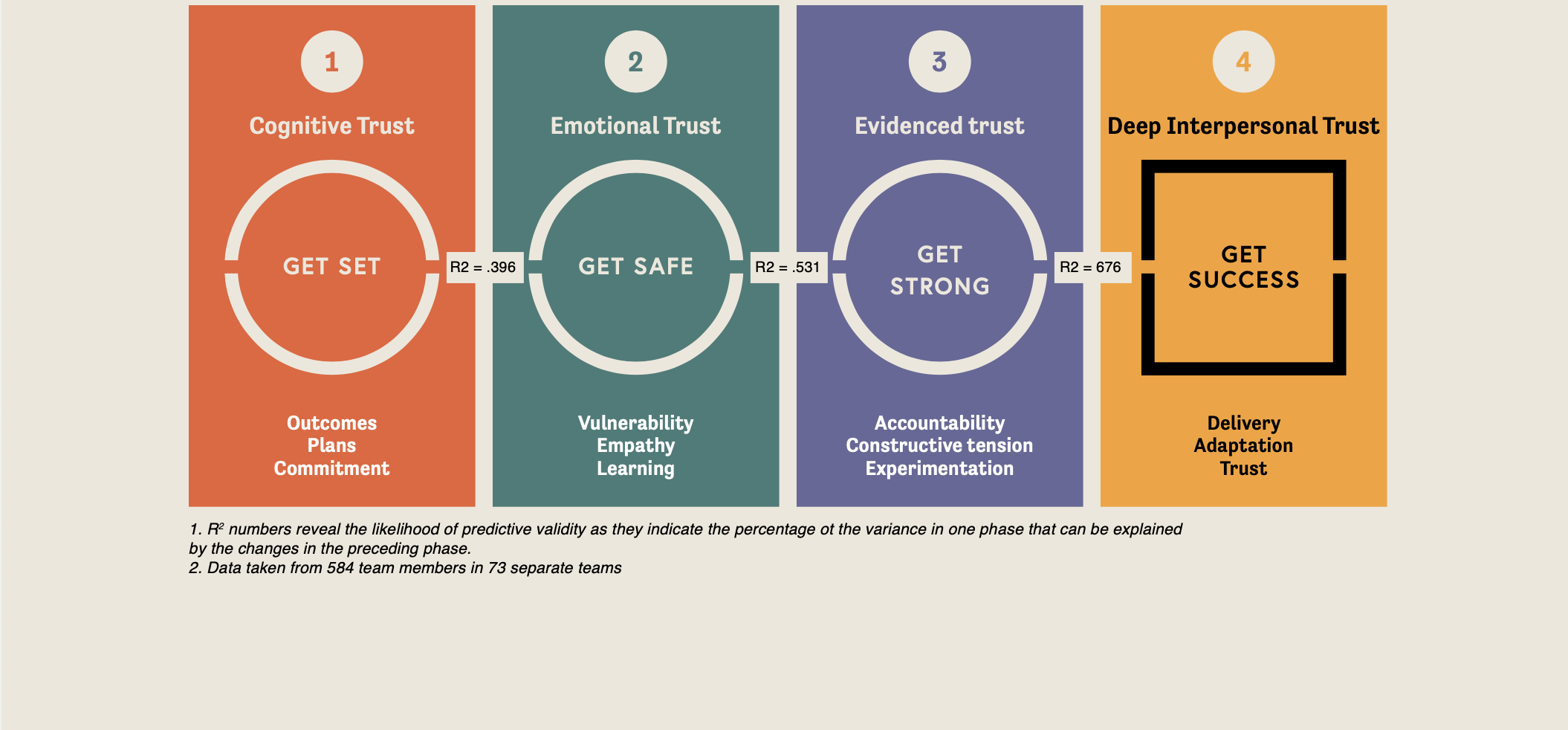
We identified 27 team behaviours that predicted 9 performance outcomes. Referring only to academic research, we then allocated these into a 4-phase sequence called the Fast Teaming Formula™:
Get Set → Get Safe → Get Strong → Get Success
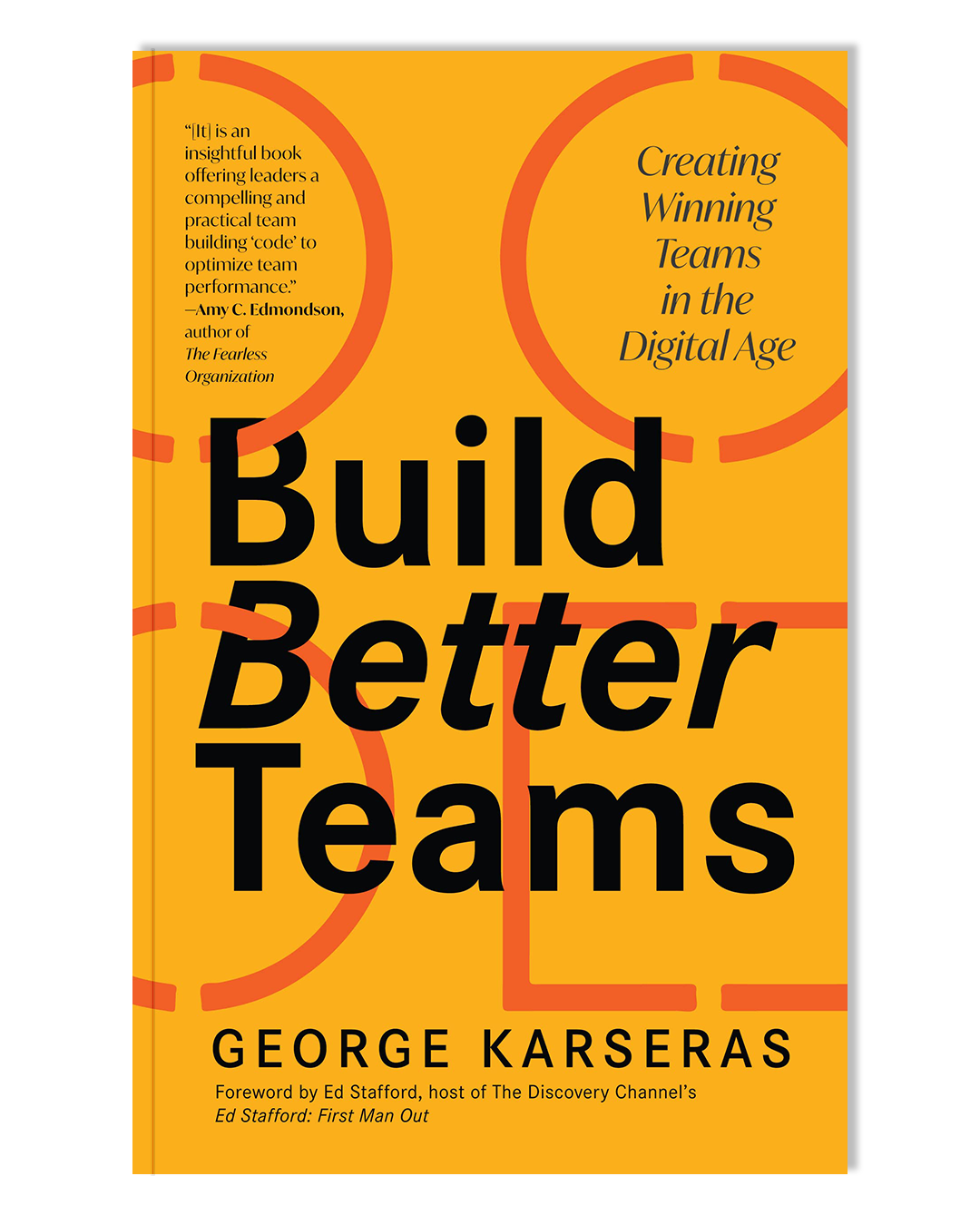
We introduced our formula and its academic credibility in our book Build Better Teams in 2022 (containing over 350 academic references). The book has received top ratings on Amazon and, more importantly, acclaim from two notable academics.
Academic Validation for the Fast Teaming Formula™
“Build Better Teams is an insightful book offering leaders a compelling and practical team building ‘code’... refreshingly grounded in academic research... illuminating the relational work that drives great teamwork and providing a well-constructed way forward through this complexity.”
“In an age where vital problems depend on teams of teams, this is a serious book that brings group dynamics into the present... building on previous models to address today’s complexity... an important addition to the literature.”
Field Test Validation
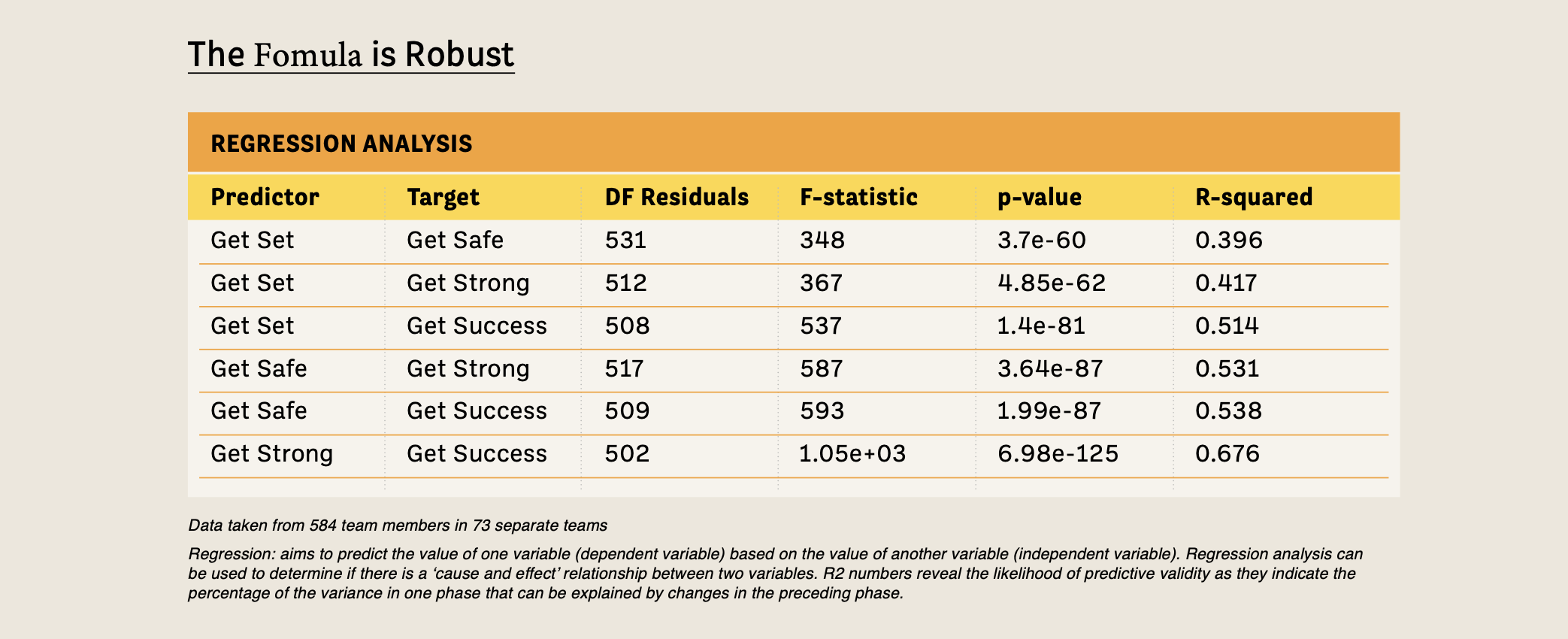
Since the publication of the formula, two separate independent field studies — one with 22 teams and one with 73 teams — have validated the paradigm as predictive, reliable and robust.
References
Reviewed Work: The Five Dysfunctions of a Team: A Leadership Fable Patrick M. Lencioni. Review by: J. Richard Hackman, Edgar Pierce Academy of Management Perspectives
Vol. 20, No. Feb 2006Gill, H., Vreeker-Williamson, E., Hing, L.S. et al. Effects of Cognition-based and Affect-based Trust Attitudes on Trust Intentions. J Bus Psychol 39, 1355–1374 (2024).
https://doi.org/10.1007/s10869-024-09986-zWageman, R., Nunes, D. A., Burruss, J. A., & Hackman, J. R. (2008). Senior leadership teams: What it takes to make them great. Harvard Business Review Press.
Parisi-Carew, E. (2011). Why teams fail—And what to do about it. Human Resource Executive Online.
http://www.hreonline.com/HRE/view/story.jhtml?id=533342576Tabrizi, B. (2015, June 23). 75% of Cross-Functional Teams Are Dysfunctional. Harvard Business Review.
https://hbr.org/2015/06/75-of-cross-functional-teams-are-dysfunctionalNink, M. (2019). Cooperation Is Key to an Agile Workplace. Gallup.
https://www.gallup.com/workplace/246908/cooperation-key-agile-workplace.aspx