The Quickest Way to Build Trust in Teams
Who doesn’t want to work in a team high in trust? Trust is one of the most commonly used words to describe what team members most want. Trust helps teams communicate, collaborate, share knowledge, take balanced risks and handle conflict. Without it, dysfunction takes root – suspicion, unresolved conflict, and a whole load of backside covering. Any team serious about high performance must not only build trust but find ways to do it quickly.
Trust, at its core, is our willingness to be vulnerable to the actions of another person. It forms in two interconnected ways: cognitive-based trust (belief in someone’s reliability and competence) and emotion-based trust (belief they will be kind and supportive to us).
Cognitive vs. Emotion-Based Trust
Cognitive trust is built on someone’s perceived skill and integrity – our belief in their ability. It’s why we trust a surgeon we’ve never met, because we know they’ve successfully operated many times before. Reputation, credentials, and prior affiliations feed this trust.
Emotion-based trust, however, is built on shared experiences, kindness, and care. It’s not imagined – it’s felt. But while emotional trust strengthens over time, it’s not always the quickest route to team cohesion.
Some team builders push for vulnerability and emotional openness as the starting place to build trust. But for workplace teams, and especially in extreme team settings, reliability and competence take precedence.
The fastest way to build trust is via cognitive based trust, rather than via emotional based trust.
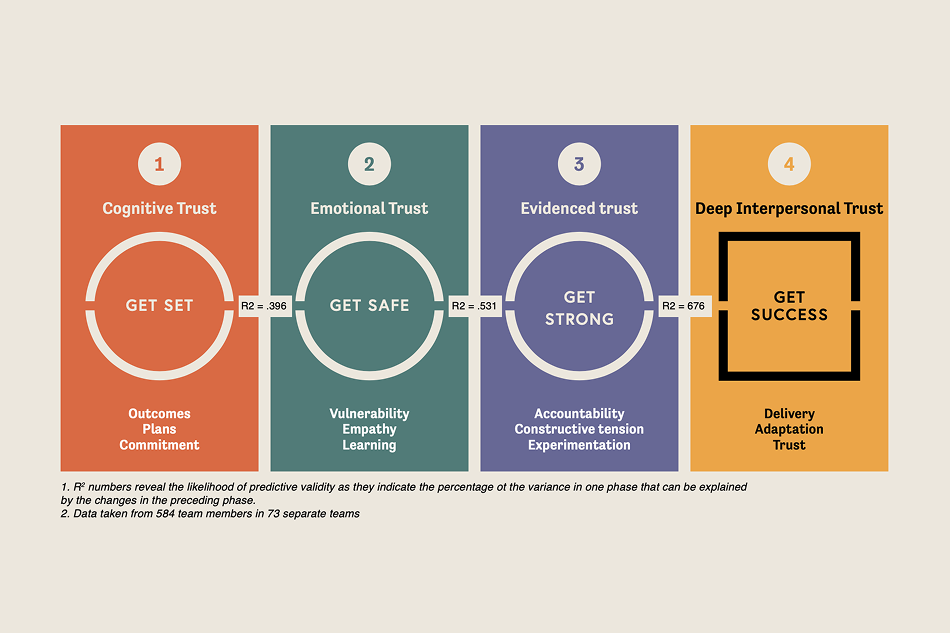
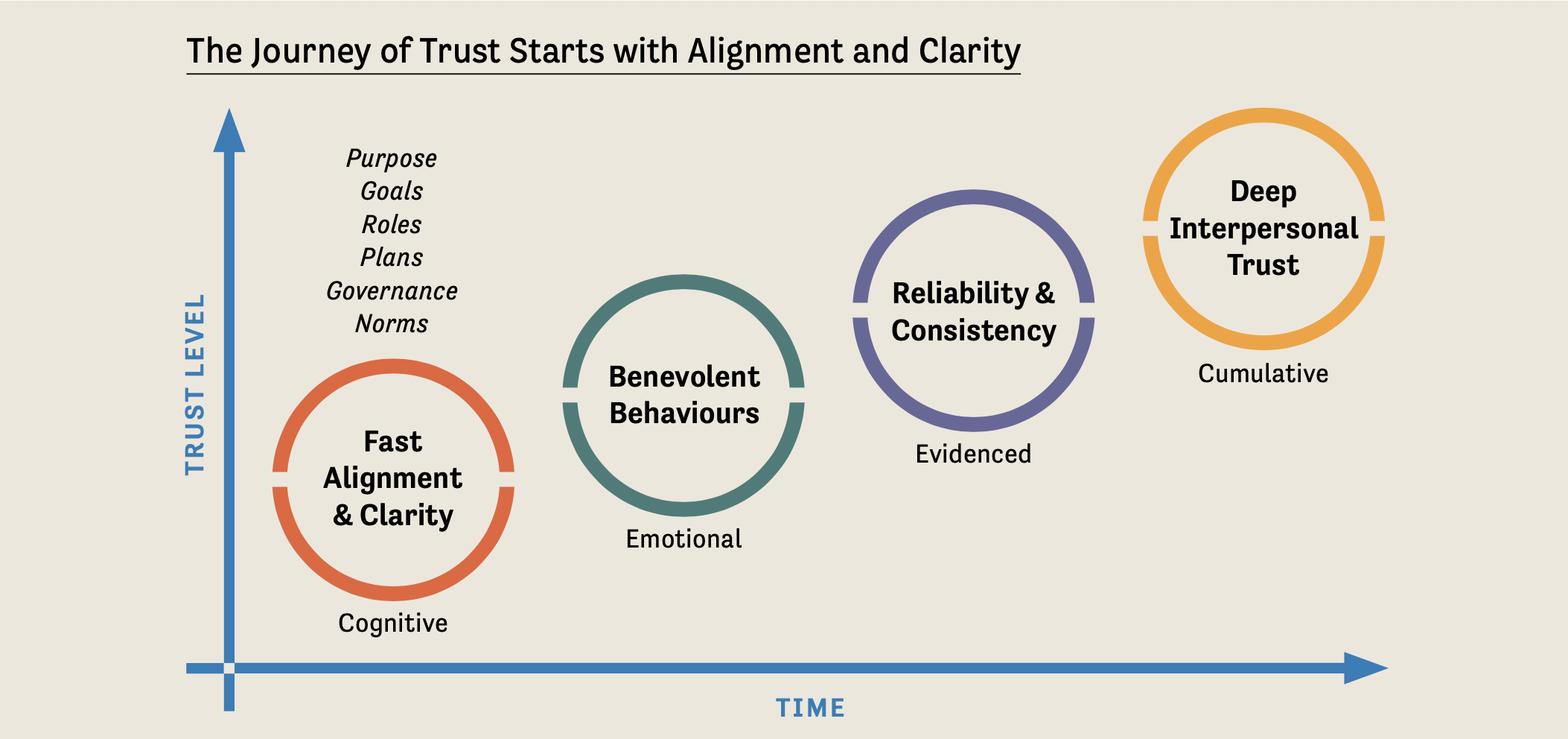
Teams value and build cognitive trust far quicker, especially teams operating under extreme pressure. Research shows that from a solid cognitive base, emotional trust is then accrued. Over time, when promises are kept and reliability is proven, the deepest level of trust – interpersonal trust – eventually takes shape.
We Trust Differently
We all carry different starting points in how we trust. Some of us are naturally more trusting – shaped by upbringing, personality or life experiences. High-trusting individuals bring huge benefits: they build trust faster, collaborate better, voice opinions more freely, and are more resilient and optimistic. They’re proactive and help teams gel quickly. Still, trust is fluid. A person can evolve to trust more (or less) over time. And a single moment shouldn’t define a person – we’re all capable of learning and growth.
The Nature of Swift Trust
Swift trust, a term coined by Debora Meyerson - Adjunct Professor at the Stanford University Graduate School of Education (GSE) - describes the rapid trust built in high-pressure, short-lived teams like the military or emergency services. In these settings, people assume competence from the get-go – they have to.
Swift trust is predominantly cognitive in nature – built on perceived ability, not emotional connection. It’s conditional and formed quickly, often before people even meet. But it must be validated by consistent behaviour over time to evolve into deeper interpersonal trust.
Building Swift Trust & ‘Same Page Trust’ in Today’s Teams
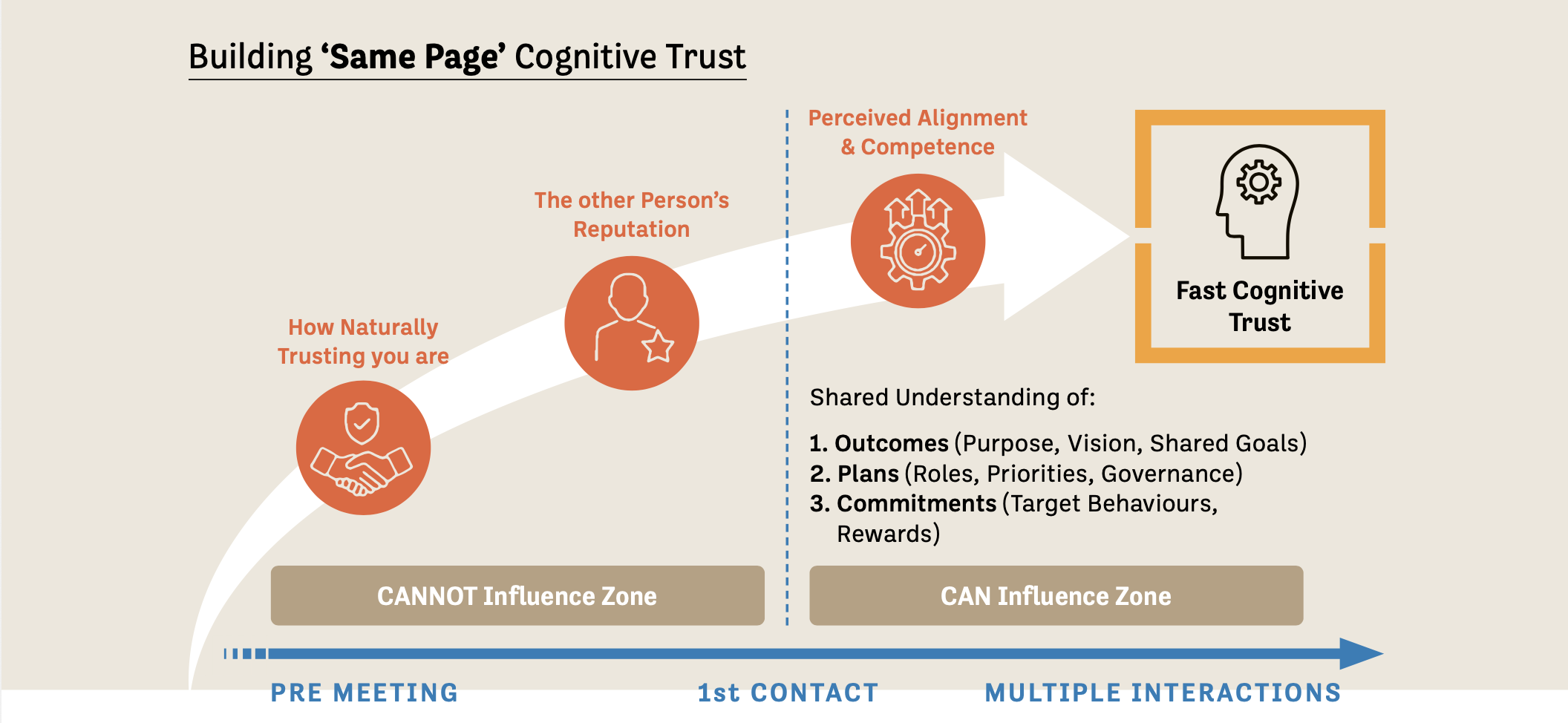
You can’t build team trust by telling people to “be more trusting,” or to simply trust in the leader. The benefits of ‘being on the same page’ are just like those we experience when a good contract is signed – our trust goes up as a result of mutual expectations being agreed upfront.
The expectations at stake in the team share a theme: they provide clarity on the nature of ‘tasks’ of the team.
The most important of these are shared understandings across the team of what we are doing, why we’re doing it, who’s doing it, how it will be done and when it will be done. t’s not enough to assume alignment – teams must explicitly agree on how they’ll work together. As humans, we construct meaning in different ways, so we naturally form different ‘mental models’ of the same constructs. The Fast Teaming Formula(TM) tells us that the most important constructs are, in order: team mission (purpose, vision, key goals); team plans (strategy, roles, priorities) and team commitments (meetings, behavioural norms, rewards). When teams fail to align this diversity to form a common ‘mental model’ of especially: team purpose, goals, roles, plans and priorities, they will most likely set off an undesirable chain of events, notably: less psychological safety; more conflict; inefficient meetings; low levels of innovation and ultimately, compromised performance. Conversely, teams that quickly create available clarity across the Get Set phase, steal a march on the competition by rapidly building cognitive trust, and setting themselves up nicely to excel in building psychological and efficient value creating collaborations across the team.
In Summary: Same Page (cognitive) Trust lays the foundation of trust to later support deeper emotional levels of trust and ultimately more profound levels of interpersonal trust.
Key Takeaways
Trust drives team success.
Trust = Cognitive (competence & integrity) + Emotional (care & connection).
Swift trust forms rapidly, primarily via cognitive trust.
We start building trust before meeting someone, based on reputation.
Getting on the 'same page' boosts swift trust.
We get on the same page by aligning our mental models of purpose, goals, plans, roles, priorities and how we will work together.
The accrued Swift trust is conditional and must be validated over time to evolve into deeper, lasting trust.